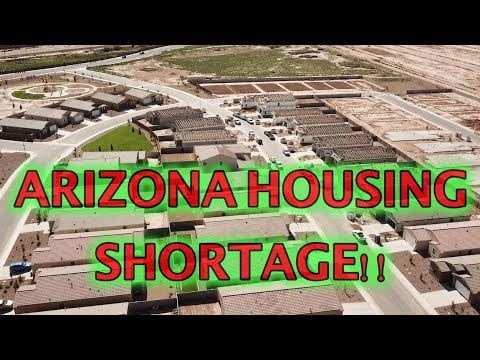
🏡 The Real Arizona Housing Problem Isn’t Ownership — It’s the Narrative
A market-based look at why housing is attainable, building is broken, and the conversation needs a reset
Housing affordability has become the default talking point in Arizona. It’s discussed at dinner tables 🍽️, debated by policymakers, and repeated so often that it’s now treated as settled fact.
While many argue that Arizona lacks sufficient housing and that prices are out of reach for most residents, I disagree with that framing.
In my view, the core issue isn’t who owns homes in Arizona.
👉 It’s how hard, slow, and expensive we’ve made it to build.
👉 And how misleading the affordability conversation has become.
📍 Arizona Has Housing — Just Not Always Where People Want It
There’s no question that some Arizona markets are expensive. But it’s inaccurate to suggest the state lacks attainable housing options overall.
If affordability is defined as buying in premium communities on an entry-level budget, housing will naturally feel out of reach. Those areas have always commanded higher prices.
However, across the greater Phoenix metro area and surrounding growth corridors, builders continue to deliver brand-new homes at price points that remain attainable for many working households — especially for buyers willing to step slightly outside their comfort zone 🚗.
That’s not a crisis. That’s how housing markets have always worked.
🏠 Renters Are Already Paying for a Home
One reality often ignored in the housing debate is this: renters are already paying housing costs — they’re just not building equity.
Many Arizona renters consistently pay monthly rents comparable to the cost of owning a modest home. The issue for many of these households isn’t affordability — it’s access.
They’ve proven they can pay. What they haven’t been given is a reasonable path into ownership.
💸 Financing Is the Real Bottleneck
If leaders truly want to expand homeownership, the focus should shift away from ownership narratives and toward modernizing the mortgage process.
Today, qualifying for a loan — especially for self-employed workers, commissioned professionals, or non-traditional earners — can be unnecessarily burdensome. Excessive documentation and rigid underwriting standards lock out people with long histories of on-time rent payments.
If rental payment history and cash-flow stability were weighted more heavily, thousands of renters could become homeowners without distorting the market.
🏗️ Market Adjustments Aren’t Market Failures
Higher-end housing development is often blamed for affordability issues, but that criticism ignores how markets function.
Developers responded to real demand during the pandemic. Today, we’re seeing price reductions, incentives, and concessions — exactly what healthy markets do when conditions change.
That’s not failure. That’s correction.
✅ What Would Actually Help Arizona Housing
- 📌 Use precise language — affordability varies by location and housing type
- 📌 Acknowledge geographic trade-offs that have always existed
- 📌 Reform lending standards to help reliable renters buy homes
- 📌 Reduce red tape so builders can build faster and cheaper
The housing challenge in Arizona isn’t primarily about investors, landlords, or ownership structure.
It’s about a broken narrative — and systems that make building and buying harder than they should be.
That’s the problem worth fixing. And it’s one Arizona can actually solve. 👊
Editor’s Note: This article reflects the author’s professional opinion based on experience in Arizona real estate.