Thinking about buying a horse property in Greater Phoenix and torn between Cave Creek and Queen Creek? You are not alone. Both areas are popular with riders and offer very different daily experiences for you and your horses. In this guide, you will learn how the two stack up on trail access, lot sizes, barns and arenas, water and utilities, and everyday services so you can choose with confidence. Let’s dive in.
Quick answer: how they differ
If you want rugged desert foothills, mountain views, and direct access to preserves, Cave Creek tends to deliver that experience. If you want flatter land, larger parcels, and more planned equestrian neighborhoods, Queen Creek is often the better fit. Both share desert heat and dust, so shade, ventilation, and water planning matter in either location. Your choice comes down to riding style, parcel size needs, budget, and where you want your daily errands and services.
Trail access and riding
Cave Creek riding options
In Cave Creek, you are near foothill and desert-mountain terrain with public riding in places like Cave Creek Regional Park and Spur Cross Ranch Conservation Area. Multi-use trail systems and nearby preserves offer scenic routes, trailer-friendly trailheads, and varied elevation. Expect more hills, rock features, and wide desert views.
What to verify in Cave Creek
- Which trail segments allow horses and if seasonal restrictions apply.
- Distance and road type to trailheads, including whether your trailer route is paved or graded.
- Where you can park a horse trailer at popular trailheads and any fees or permits.
Queen Creek riding options
In Queen Creek, the landscape is flatter and historically agricultural, with access to San Tan Mountain Regional Park. Some planned neighborhoods include private bridle paths or trail connections. You will find broad washes and open-space corridors that make for steady, lower-elevation rides.
What to verify in Queen Creek
- Trail rules at San Tan Mountain Regional Park and any private trail system guidelines in your subdivision.
- Parking options for your trailer and the best access roads from your property.
- Whether state trust or BLM lands near you need permits to ride or stage.
Lot sizes and zoning realities
Cave Creek parcel patterns
Cave Creek mixes older rural subdivisions with irregular foothill parcels. Many lots are shaped by slopes, rock outcrops, and washes. You will find everything from small ranchettes to multi-acre properties, often with premium pricing for views and proximity to Scottsdale amenities.
Queen Creek parcel patterns
Queen Creek’s roots are agricultural. You will see more 1 to 5 acre ranchettes in planned equestrian communities, plus larger farms on the outskirts. Parcels are generally flatter, which can simplify arena placement and fencing. You may also encounter HOA communities that market equestrian lifestyles with specific design standards.
Rules and permits to confirm
Before you fall in love with a property, confirm the basics with the town or county where it is located. Queen Creek spans parts of Maricopa and Pinal counties, and each jurisdiction can have different rules.
- Zoning and animal allowances per acre, including limits and definitions for personal use versus commercial use.
- Setbacks for barns, arenas, manure storage, and septic systems.
- HOA CC&Rs that may regulate fencing type, arena visibility, or the number and placement of animals.
- Whether the parcel includes a wash that sits in a FEMA floodplain or is subject to county flood control regulations.
Water, septic, and utilities
Reliable water is a top priority for horse health in the desert. Properties may be on municipal water, a private well, or hauled water. Many rural parcels rely on wells, so verify well registration and available pumping with the Arizona Department of Water Resources. If you are planning irrigated pasture, confirm whether water rights or sufficient well capacity exist, and be realistic about costs in a low-rainfall climate.
Most horse properties use septic systems. Ask for soil and percolation tests and permits, and plan your site layout so septic components sit well away from barns and manure areas. Power, natural gas, and broadband can vary by location. Extending utilities to remote parcels can be costly, and some rural areas have limited internet speeds. If you rely on remote work or cameras at the barn, check provider options and expected speeds before you buy.
Barns, arenas, and desert design
Arena footing and dust
Native desert soils are often too hard or dusty for safe footing. Sand blends or engineered mixes usually perform better. Budget for regular dragging and watering for dust control. During monsoon season, drainage design matters, so keep arenas and pads away from wash pathways and use grading to shed water.
Shade and ventilation
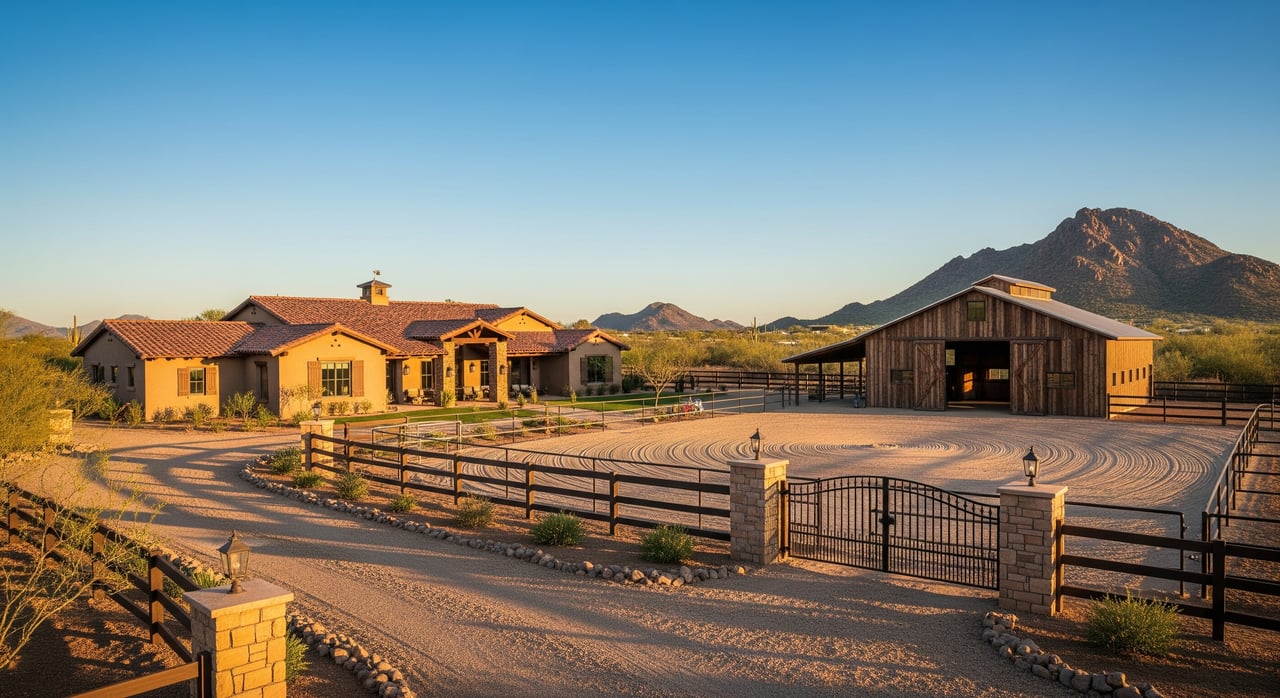
Shade is essential for horse safety and comfort. Open-sided barns or well-vented shed rows with roof overhangs help cut heat stress. Consider orientation to capture breezes and to keep afternoon sun off stalls. A dry, ventilated area for hay storage reduces fire risk and protects your feed investment.
Fencing and turnout
Common fencing options include pipe rail, split rail, board, and high-tensile. Choose for safety and maintenance needs, and confirm what your local ordinances or HOA allow. High-traffic paddock areas benefit from a geotextile base and top-dressing to reduce mud, holes, and abrasion.
Manure and pests
A simple manure plan keeps barns clean and neighbors happy. Decide whether you will compost, haul, or arrange off-site removal, and confirm any local nuisance rules. Seasonal fly pressure exists even in the desert, so plan for sanitation, fly management, and water control.
Fire and emergency plans
Wildfire defensible space is more relevant in the Cave Creek foothills near brush. Keep vegetation trimmed around barns and storage, and confirm any local fire department requirements. Know your emergency trailer routes and how long it takes to reach equine veterinary care.
Everyday logistics and services
Veterinary and farrier access
The Phoenix metro supports several equine veterinarians and ambulatory services, with larger equine hospitals in the Scottsdale, Gilbert, and Queen Creek areas. Travel time is critical in emergencies. If you are far from main corridors, ask your vet and farrier about coverage areas, travel fees, and scheduling.
Hay, feed, and supplies
Queen Creek’s agricultural setting can mean easier access to locally grown hay in season, while Cave Creek often requires longer delivery routes. Plan for seasonal price swings and adequate, dry storage that is rodent resistant. If you run multiple horses, calculate annual tonnage and delivery frequency so your storage and budget match your program.
Commute and daily amenities
In Cave Creek, you are closer to North Phoenix and Scottsdale services and dining. In Queen Creek, you are closer to southeast valley employment centers and growing retail hubs. For larger parcels, check drive times to grocery, pharmacy, and emergency services, and confirm cell coverage at the property if you rely on mobile hotspots or cameras.
Insurance and taxes
Rural properties can carry different insurance costs, especially if you insure barns, hay, or any equine liability for boarding or training. Property taxes vary by county and can include special assessment districts for flood control or irrigation. Factor these items into your operating budget along with utilities and routine barn maintenance.
Budget and market realities
Cave Creek properties often command a premium for views and foothill settings, and even smaller acreages may have higher per-acre pricing. Queen Creek offers more options for larger flat parcels and planned equestrian communities, though HOAs may bring constraints on fencing, arenas, and outbuildings. If you plan to build or improve, expect significant site work in either location. Common line items include grading, power extension, well drilling or upgrades, septic installation, arena construction, fencing, shade structures, and footing maintenance. Experienced equine builders who understand desert soils and drainage can save you time and expense.
Due diligence checklist
Use this quick checklist to avoid surprises during your purchase process.
Legal and title
- Order a full title search and review easements, access rights, and any conservation restrictions.
Zoning and rules
- Confirm zoning and number of animals allowed per acre with the town or county.
- Request HOA CC&Rs and amendments and review fence and structure rules.
Water and soils
- Pull well registration and logs through the Arizona Department of Water Resources if a well exists.
- Order soil and perc tests and review USDA soil data for drainage and compaction.
Flood, fire, and hazard
- Check FEMA flood maps, county floodplain data, and local fire department defensible space guidance.
Infrastructure and services
- Confirm electric service capacity for pumps and motors, broadband options, and who maintains the roads.
- Verify proximity and response time for equine emergency vets.
Operations and inspections
- Sketch a site plan showing barns, arena, paddocks, manure storage, and septic with required setbacks.
- Walk fences, barns, and arenas with an experienced equine professional and visit after monsoon rain to evaluate drainage and access.
Which area fits your program
Choose Cave Creek if you want foothill riding, scenic desert terrain, and access to multiple preserves. Expect irregular parcels, premium pricing, and close-in access to North Phoenix and Scottsdale amenities. Choose Queen Creek if you want flatter ground, more options for larger lots, and planned equestrian communities with potential private trail networks. Expect HOA guidelines in some subdivisions, and good access to southeast valley services and feed sources. In either case, plan for shade, dust control, reliable water, and well-designed drainage to keep your horses healthy year-round.
Thinking about a specific property or need help weighing tradeoffs for your riding style and budget? Connect with the brother-and-sister team that pairs local market knowledge with equine expertise. Reach out to The Grandon Group to talk through your wish list, tour properties, or get a clear plan for your move.
FAQs
What is the main difference in riding between Cave Creek and Queen Creek?
- Cave Creek offers foothill and desert-mountain trails with varied elevation near major preserves, while Queen Creek provides flatter rides with access to San Tan Mountain Regional Park and agricultural corridors.
How many horses per acre are allowed in each area?
- Animal limits vary by zoning and jurisdiction, and Queen Creek spans both Maricopa and Pinal counties. Always confirm the specific zoning code and allowed animal units with the local planning department before you buy.
Do I need permits to build a barn or arena in Greater Phoenix?
- Accessory structures like barns, covered arenas, and hay storage typically require permits, inspections, and adherence to setbacks and height limits. Check with the town or county building department and any HOA for approvals.
Is irrigated pasture realistic for horse properties here?
- Irrigated pasture is possible where water rights and supply exist, but year-round pasture is costly in an arid climate. Many owners rely on dry lots with shade and feed supplemented by hay.
What should I check about wells and water before closing?
- Verify well registration and logs with the Arizona Department of Water Resources, confirm water quality and static levels, and match capacity to your horse count and arena dust control plans.
Are HOAs common on horse properties in Queen Creek?
- Many planned equestrian communities in Queen Creek include HOAs and CC&Rs that regulate fencing, outbuildings, and animal limits. Review all documents carefully to ensure they fit your needs.